
EN


EN


Xiamen Current location:Home - Xiamen
Date: 2026/7/20 Hit: 11
Day 1 Arrival in Xiamen: Airport / Station Pick-up Service + Gulangyu Island
Meal arrangements: Meals are at your own expense
Accommodation: Xiamen City
Hello and welcome to Xiamen, a renowned coastal city in China's Fujian Province where mountains and seas embrace each other and Eastern and Western cultures blend seamlessly. Our driver will meet you at the airport or train station exit and escort you to our carefully selected hotel for check-in procedures.
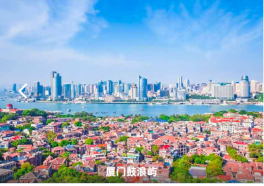
After a brief rest, you will be taken to the port terminal and board a 20-minute ferry to Gulangyu Island. Gulangyu is one of the most beautiful islands in Xiamen, Fujian Province, and was inscribed on the World Heritage List in 2017 as a "Historic International Community," making it a must-visit destination for travelers to Fujian. The island boasts 931 historical buildings blending Chinese and Western architectural styles, including Gothic churches, Baroque consulates, and traditional Minnan red-brick houses, earning it the reputation as a "World Architecture Expo." Moreover, it has the highest per capita piano ownership rate in China, along with China's first Piano Museum and the world's largest Organ Museum. It has also nurtured numerous internationally renowned musicians, earning it the titles of "Island of Music" and "Island of Pianos." Additionally, motor vehicle access is prohibited throughout the island, enhancing its serene atmosphere, allowing you to stroll leisurely and enjoy the picturesque island scenery, fully immersing yourself in the elegant charm of a "Sea Garden."
Today's visit to Gulangyu Island offers you a cultural and historical architecture tour (approximately 4–5 hours), showcasing diverse old buildings and their fascinating historical stories.
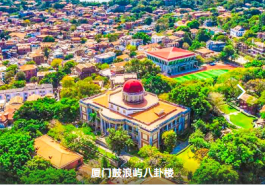
Key attractions along the route: Sanqiu Tian Wharf (one of the earliest wharves on Gulangyu Island) → Ship House (the only villa on Gulangyu designed in the shape of a ship, and a rare ship-shaped villa worldwide) → Bagua Tower (the only and largest organ museum in China, blending ancient Greek, Roman, Islamic, and Minnan architectural styles; renowned as the "Little White Palace of Gulangyu" for its red dome and grand appearance, it is the most prominent landmark on the island) → Yangjia Garden (one of Gulangyu's ten famous villa complexes, hailed as the "Versailles of Gulangyu") → Fanpo Tower (built by Filipino Chinese Xu Jingquan, combining Rococo style with Minnan craftsmanship and featuring vibrant colors) → Sanyi Church (Gulangyu's earliest and largest Christian chapel, featuring a rare symmetrical Greek cross design) → Jingu Tower (also known as Huang Cimin Villa, one of Gulangyu's ten major villas and a representative historical architectural complex, celebrated for its Byzantine-style "golden melon" dome and fusion of Eastern and Western designs) → Dafu Residence (one of the earliest surviving residential buildings on Gulangyu, a typical Minnan-style red-brick house) → Four-Unit Compound (a representative example of Minnan-style red-brick houses and the oldest existing residential complex on Gulangyu) → Chujia Garden (one of the best-preserved overseas Chinese villas on Gulangyu) → Huang Family Garden (the largest and most luxurious private residence on Gulangyu, dubbed the "First Villa in China," where many international dignitaries have stayed) → Shuzhuang Garden ("The Premier Mansion at Sea," renowned for its unique sea-inspired design and a piano museum housing numerous rare instruments) → Haitian Paradise (one of Gulangyu's ten major villas). A prime example of Chinese architecture blending Western elements (with opportunities to watch a Nanyin performance) → Huang Rongyuan Hall (the most romantic and exquisite villa on Gulangyu Island, as well as China's first national-level record museum) → Catholic Church (the most beautiful church on Gulangyu Island and the only surviving Gothic church in Xiamen) → Return to the dock.
Tip: Since you'll be walking a lot, wear comfortable shoes for a better experience.
Day2 One-day tour from Xiamen to Nanjing's Tulou sites: Tianluokeng Tulou Cluster + Yuchanglou + Taxia Village + Hekeng Tulou Cluster
Dining: Includes breakfast and lunch
Accommodation: Xiamen City
This morning, you will depart from Xiamen City and travel approximately 150 kilometers (about 2.5 hours) by vehicle to visit the Nanjing Tulou. There are currently over 15,000 Tulou in Nanjing, which serve as typical representatives of Fujian's Hakka Tulou architecture and are also treasures of China's residential architecture, often referred to as "the world's unique mountain village dwellings." Among them, the Tianluokeng Tulou Cluster, the Hekeng Tulou Cluster, as well as the Huaiyuan Lou and Hegui Lou, were inscribed on the World Heritage List in 2008.
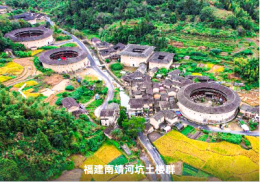
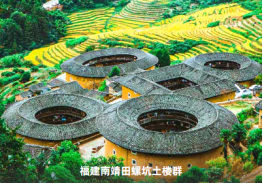
Upon arrival, visitors should first visit the Tianluokeng Tulou Cluster. Built in 1662, this cluster serves as a settlement for the Huang clan of the Hakka people and has gained widespread fame for its unique layout resembling "four dishes and one soup." It is the most distinctive landmark among Fujian Tulou, comprising one square tower (Buyun Tower), three circular towers (Hechang Tower, Zhenchang Tower, and Ruiyun Tower), and one oval tower (Wenchang Tower). These five tulou structures adhere to the principle of mutual generation among the Five Elements (Metal, Wood, Water, Fire, and Earth) and are renowned as a "unique architectural marvel in the world" and an "outstanding representative of China's feng shui architecture."
Recommended tour route: Up to the viewing platform (offering a panoramic view of the "Four Dishes and One Soup" dish, evoking scenes reminiscent of "blooming plum blossoms" or "a flying saucer landing"); then to Bu Yun Lou (symbolizing "ascending rapidly in success," from which visitors can admire scenes of Hakka daily life); next to He Chang Lou/Zhen Chang Lou/Rui Yun Lou (perfect for capturing the courtyard perspective featured in the film Big Fish & Begonia); followed by Wenchang Lou (the only oval-shaped tulou in Nanjing, representing "prosperous cultural heritage," ideal for photographing the harmonious blend of tulou architecture and terraced fields); finally to the lower viewing platform (where the tulou complex and terraces appear as if forming the Potala Palace). Lunch features delicious Hakka cuisine, allowing visitors to experience the local lifestyle; those interested may also sample the rich and aromatic Hakka rice wine.
After lunch, head to Xiaban Village, where streams wind through and terraced fields surround the area. Along both banks of the stream stand 12 quaint tulou buildings arranged in a picturesque pattern. Among them, Yuchang Lou is our main focus of visit. Built during the late Yuan and early Ming dynasties (approximately 1308–1368), it is one of the oldest surviving circular tulou in China, hailed as the "Father of Fujian Tulou." Its unique architectural feature lies in the pillars of the third to fourth floors tilting clockwise by 15 degrees and the fifth floor tilting counterclockwise, creating a remarkable "eastward and westward tilt" phenomenon. Having stood firm for over 700 years despite weathering numerous challenges, it is renowned as the "First Marvelous Tulou of China." You can stroll through this architectural wonder, observe up close the daily life of the Hakka people living in these tulou, or engage with them to learn more about their fascinating stories and distinctive folk culture. Additionally, be sure to savor a cup of black tea brewed by local residents—it is exceptionally smooth and delicious.
Next, visit the ancient Hakka village of Taxia Village. The village is arranged in an "S" -shaped pattern along the stream, with two circular tulou buildings (Yude Lou and Shunchang Lou) situated on either side of the watercourse, resembling a Taiji symbol, earning it the nickname "Taiji Water Village." Additionally, thanks to its picturesque environment, pristine air, abundant springs, and the healthy lifestyle of its residents, it is renowned as the "Longevity Village." Moreover, 11 concrete bridges and several tulou structures in the village were built with funding from overseas Chinese, showcasing distinct characteristics of a hometown for overseas Chinese. Visitors can stroll through the picturesque ancient village landscape and admire the diverse architectural styles of the tulou buildings, among which Yude Lou (the apron-shaped building) and the Zhang Family Temple at Deyuantang (home to China's most complete cluster of 24 stone dragon flagpoles) deserve particular attention.
If you have extra time, you can visit the Hekeng Tulou Cluster, one of the most densely concentrated World Cultural Heritage sites of Fujian Tulou. It is renowned for its unique "Big Dipper" layout and the remarkable interweaving of square and circular tulou structures, with Chaoshui Lou (built during the Jiajing era of the Ming Dynasty, the oldest square tulou) and Yuxing Lou (a modern circular tulou) being particularly representative and well worth seeing. Additionally, you can climb the Lion Mountain viewing platform to enjoy a panoramic view of the "Big Dipper" formation and capture stunning travel photos. Notably, the Hekeng Tulou Cluster served as the inspiration and filming location for Mulan's hometown in Disney's live-action film Mulan; if interested, you can visit the corresponding scenes featured in the movie.
matters need attention :
To visit the Tianluokeng Tulou complex, you can choose to hike on foot or take a sightseeing bus.
The Hekeng Tulou Cluster: After getting off at the entrance, it takes approximately 15 minutes to walk to the main tulou structures.
After the tour, you will return to your hotel in Xiamen to rest.
Day3 One-day tour of Xiamen city center: Nanputuo Temple + Zhongshan Road + Ring Island Road
Dining: Includes breakfast and lunch
Accommodation: Wuyi Mountain
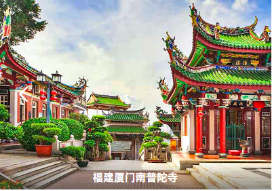
This morning, you are invited to visit Nanputuo Temple, renowned as the "Holy Land of Southern Fujian Buddhism," and enjoy its serene atmosphere before the crowds gather. Founded during the late Tang Dynasty and Five Dynasties period, Nanputuo Temple boasts a history spanning over a millennium. It is one of the most famous temples in Fujian, the birthplace of the Minnan Buddhist Academy, and one of China's four major Guanyin pilgrimage sites. Influenced by the culture of Southern Fujian's overseas communities, it enjoys great popularity in Southeast Asia, with a folk legend even stating, "Visit Nanputuo once a year, and you'll avoid suffering for three years." The temple has always been bustling with devotees. You can stroll through its tranquil surroundings and admire magnificent Buddhist structures such as the Great Compassion Hall (a masterpiece of Minnan Buddhist architecture, featuring exquisite red bricks, glazed tiles, and octagonal triple-eaved roofs) and the Sutra Repository (housing the Ming Dynasty Wanli-era manuscript of the Lotus Sutra). If interested, you may also savor the temple's vegetarian cuisine or try traditional vegetarian cakes crafted using ancient techniques.
Next, you can stroll along Zhongshan Road, the most representative century-old street in Xiamen, to experience the rich charm of old Xiamen. As China's only commercial pedestrian street directly connected to the sea, Zhongshan Road preserves a large number of intact Nanyang-style arcade buildings and historical relics, earning it the reputation as "a living fossil of Xiamen's modern history." Here, you can immerse yourself in the rustic Nanyang architecture, savor authentic local delicacies, and watch captivating intangible cultural heritage performances such as Nanyin music and puppet shows.
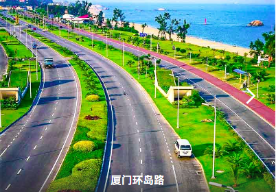
Alternatively, you can venture into the alleys near Zhongshan Road to explore Xiamen's local lifestyle and savor Minnan-style delicacies such as Shacha noodles and oyster eggs. Seafood is a highlight of Xiamen's cuisine; you're welcome to visit the nearby No.8 Seafood Market to discover rare varieties and try local seafood dishes. (PS: If you decide to dine at the market, be sure to negotiate prices before purchasing seafood to avoid any misunderstandings.) Afterwards, you can leisurely drive along Huan Dao Road, renowned as one of "China's most beautiful coastlines," enjoying the picturesque coastal scenery that features "blue seas and golden sands reflecting the red road, with palm groves and sculptures lining the way." For an immersive experience of this stunning coastline, stop at landmarks such as Yefengzhai (a iconic seaside spot offering views of Kinmen Island), Baicheng Beach (perfect for photographing the Twin Towers against the orange sea at dusk), Huangcuo Beach (Xiamen's best sunrise viewing spot), and Zengcuoan (China's most artistic fishing village).
After the tour, you will proceed to Xiamen Railway Station and take a high-speed train (approximately 2.5–3 hours) to Wuyishan. Our driver will meet you at the station exit and escort you to our carefully selected hotel for check-in and rest.
Day4 Wuyi Mountain One-Day Tour: Tianyou Peak + Zhu Xi Garden + Jiuku Stream + Wuyi Palace + Song Dynasty Street
Dining: Includes breakfast and lunch
Accommodation: Wuyi Mountain
Wuyi Mountain is located in the northwest of Fujian Province, China, and is a renowned site of both cultural and natural world heritage. It is famous for its Danxia landforms, tea culture, and the integration of the three major religions (Taoism, Buddhism, and Confucianism), forming a unique charm described as "clear waters and vermilion mountains, where poetry and tea blend harmoniously," earning it the reputation as "the most spectacular scenery in southeastern China." As a sacred center of tea culture, Wuyi Mountain is also the birthplace of Oolong tea and black tea, with its parent variety Dahongpao hailed as the "King of Teas" and renowned worldwide.
This morning, you will take a sightseeing bus to the foot of Tianyou Peak, one of Wuyi Mountain's most famous and popular attractions. Renowned as "Wuyi's premier scenic spot," it is celebrated for its steep terrain surrounded by streams on three sides and the breathtaking sea of clouds after rain. A local saying goes, "A visit without seeing Tianyou is a wasted trip." The Ming Dynasty traveler Xu Xiake described it as "capable of showcasing the full beauty of the Nine-Bend Stream even without being adjacent to it; this peak truly ranks first." To reach the summit, you must climb 848 steep steps. From there, you'll enjoy a 360-degree panoramic view of the Nine-Bend Stream encircled by emerald waters and the Danxia landforms; when shrouded in mist, the scene resembles a fairyland like Penglai. Along the way, you can also admire cliff inscriptions such as "The First Mountain" and "A Blessed Land and Heavenly Abode."
Next, visit Zhu Xi Garden, renowned as a "sacred site akin to Tsinghua and Peking Universities." Also known as Wuyi Jingshe, it was the venue where the celebrated Southern Song Neo-Confucian scholar Zhu Xi delivered his lectures and is considered the birthplace of Zhu Xi's Neo-Confucianism. Strolling through the garden allows visitors to admire precious historical artifacts and relics, gain a deep understanding of Zhu Xi's life and philosophical ideas, and fully experience its core philosophy of "taking principle as the foundation and cultivating oneself through clarity of reason." Those interested may also don traditional Hanfu attire and capture stunning vintage photos against the backdrop of architecture featuring blue tiles and white walls set amidst picturesque landscapes.
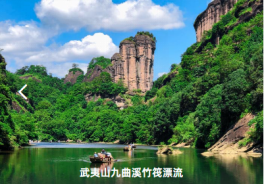
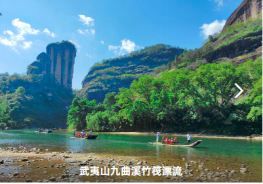
In the afternoon, visit Jiǔqūxi Stream, which epitomizes Wuyi Mountain's "emerald waters and vermilion peaks." Spanning 9.5 kilometers with its "nine bends and eighteen twists," the river connects 36 peaks and 99 rock formations, earning it the reputation as "China's most beautiful stream." You will proceed to the bamboo rafting dock at Jiǔqūxi and embark on a journey downstream along the winding stream (approximately 1.5 hours). Along the way, you'll admire Danxia landforms such as Yùnü Peak and Dàwáng Peak, stone carvings by historical figures like Zhu Xi, various peculiar peaks and rocks, ancient tea routes with a long history, and the charming ambiance of tea gardens. You'll also visit filming locations from Journey to the West, experience the beauty of "sailing on emerald waves while wandering through a painting," listen to the moving legend of "the fairy's love for mortal life," and learn about the mysterious story of the ancient Yue people's hanging coffins.
Finally, we arrived at the endpoint of the bamboo raft漂流 along the Nine-Bend Stream – Wuyi Palace. Originally constructed during the Tianbao era of the Tang Dynasty, it boasts a history of over 1,200 years. Initially serving as a site for imperial sacrifices to Lord Wuyi, it remains the oldest surviving palace complex in Wuyi Mountain. Renowned scholars such as Zhu Xi, Lu You, and Xin Qiji once taught or held official positions here, earning it recognition as one of the "Six Great Historical Sites of the Song Dynasty." Within the palace grounds lies the Wan Nian Palace (Zhu Xi Memorial Hall), which houses two Song Dynasty osmanthus trees aged between 800 and 900 years. Legend has it these were planted during the establishment of the temple in the Southern Tang period, with one specifically replanted by Zhu Xi; known as the "King of Osmanthus Trees," it is a must-visit attraction.
Next, you will visit Song Street near Wuyi Palace. Spanning 300 meters, this ancient-style commercial pedestrian street is themed around Song Dynasty culture and is renowned as the "Thousand-Year-Old Corridor of Song Charm." You can stroll leisurely through it, admire distinctive Song-style architecture, experience traditional tea preparation methods and Jianzhan cup making techniques, or savor local delicacies such as Da Hong Pao milk tea and Xiaomu cakes, immersing yourself in the quintessential Song-era lifestyle centered around tea banquets and cultural gatherings. Additionally, taking photos while wearing Hanfu on Song Street is highly picturesque, especially during dusk when the atmosphere reaches its peak.
Evening optional activities: "Impression Dahongpao" (19:30–20:40). In the evening, you may choose to watch the world's first 360-degree rotating live performance themed around tea culture, created by Zhang Yimou's team. Set against the backdrop of Wuyi Mountains and waters, the show integrates the legend of Dahongpao, tea-making techniques, and folk art, complemented by traditional China music and advanced special effects, offering an immersive audio-visual feast that blends mountains, water, and tea.
Day5 Wuyi Mountain Tea Culture Tour: Dahongpao Scenic Area + Xiamei Village
Dining: Includes breakfast and lunch
Accommodation: arranged by oneself
Today, you will delve into the rich and enduring tea culture of Wuyi Mountain. After breakfast, you will take a sightseeing bus to the Dahongpao scenic area to visit the millennium-old Tianxin Yongle Chan Temple – a Buddhist monastery with over 1,200 years of history. As the largest Buddhist temple in Wuyi Mountain and the best-preserved imperial Chan temple from the Ming and Qing dynasties in Fujian Province, it holds profound mystique due to the legend of "the top scholar wearing a red robe while drinking tea from a tea tree."
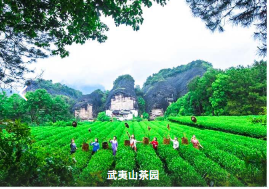
After visiting the temple, you can leisurely stroll through the Dahongpao tea garden, admire the ancient tea trees with a history of 360 years—including the mother tree Dahongpao—and enjoy the scenic views of the tea plantation with its rock formations and floral fragrance. You may also visit the cliff carvings on the Danxia rock walls and capture scenes of local tea farmers harvesting tea leaves. If interested, you can further explore the Wuyi Mountain tea culture embodying the philosophy of "tea and Zen as one" at a tea house, savoring legendary teas such as Dahongpao.
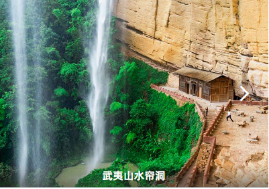
Next, proceed to Shuilian Cave, the largest Danxia rock cave in Wuyi Mountain, to admire the magnificent Danxia waterfall scenery and experience the philosophical atmosphere embodied in Zhu Xi's verse: "How can the stream be so clear? Because it has a continuous flow of fresh water at its source." During the rainy season, visitors can marvel at the spectacular hundred-meter-perfect waterfall known as the Pearl Curtain; in the dry season, they can appreciate the serene beauty of pearls cascading down.
Finally, head to Xiamei Village, located approximately 8 kilometers east of Wuyi Mountain. This is a renowned historical and cultural village in China and the starting point of the "Tea Route" that spans Asia and Europe. During the Qing Dynasty, merchants from Shanxi sold tea here to Russia and extended its distribution to Central Asia and other European countries. The village preserves over 30 ancient residences from the Ming and Qing dynasties, celebrated for their brick carvings, wood carvings, and stone carvings, which blend the architectural style of Shanxi merchants with the local characteristics of northern Fujian, making them exceptionally unique—such as the Zou Family Ancestral Hall and the Daifu Residence.
With the tour concluded, your five-day unforgettable journey to Wuyi Mountain in Xiamen, Fujian will come to an end. Our driver will take you to the airport or train station for your next destination.
We sincerely thank you for choosing Odyssey Travel, enabling us to provide high-quality travel services for your visit to Wuyi Mountain in Xiamen, Fujian. We look forward to serving you again on your future journey to China and embarking on a new exciting adventure together.
Hunan Province Menglv International Travel Agency Co., Ltd Zhangjiajie Grand Canyon Zhangjiajie Seventy Two Strange Buildings Tianmen Mountain Forest Park Zhangjiajie Forest Park


Copyright ©2026-2031 Hunan Province Menglv International Travel Agency Co., Ltd All rights reserved
Tel:+86 19974447756

li13761893555@gmail.com

Rooms 1701-1703, Jingyuan Building, Huilong Road, Yongding District, Zhangjiajie City, Hunan Provinc