
EN


EN


Zhangjiajie+Guizhou Current location:Home - Zhangjiajie+Guizhou
Date: 2026/7/21 Hit: 109
Day1 arrives in Zhangjiajie and then proceeds to Wulingyuan.
eals: Meals are at your own expense
Accommodation: Wulingyuan Scenic Area
Welcome to Zhangjiajie! Our tour guide will meet you at the airport exit and escort you to your hotel in the Wulingyuan Scenic Area for check-in. The journey covers 35 kilometers and takes approximately one hour by car. After arriving at the hotel, you can freely arrange your time.
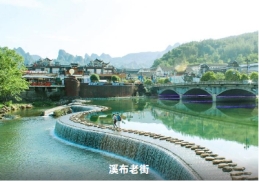
Free-time activities recommendations: Explore Xibu Old Street, where you can visit shops selling local Xiangxi folk cultural souvenirs or traditional handicrafts, stroll through the historic streets to admire distinctive Tujia ethnic architecture, and savor local delicacies such as frog cake and Tujia fried rice – iconic dishes of Hunan cuisine.
Recommended arrival method:
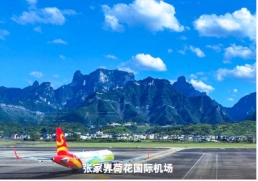
Air Transport: Zhangjiajie Lotus International Airport (DYG) operates numerous international direct flights to destinations such as Malaysia (4h 55min) and South Korea (3h 35min), as well as extensive domestic routes to cities including Beijing, Shanghai, Xi'an, Changsha, Chengdu, Chongqing, Hangzhou, Guangzhou, and Hong Kong, offering exceptional transportation convenience.
Train: Zhangjiajie boasts a well-developed rail network. You can take high-speed trains from cities such as Changsha (2–4 hours), Fenghuang Ancient City (1 hour), Beijing (11 hours), Shanghai (9 hours), Guilin (7 hours), and Guangzhou (13 hours and 15 minutes) to reach Zhangjiajie.
Additional Information:
Wulingyuan Scenic Area: Recognized as one of China's top ten tourist destinations, Wulingyuan Scenic Area is not only a World Natural Heritage site but also among China's first batch of Global Geoparks. It comprises several scenic areas including Zhangjiajie National Forest Park, Tianzishan Nature Reserve, Yangjiajie Scenic Area, and Suoxiyu Nature Reserve. Our itinerary primarily focuses on visiting the most popular and representative sites: Zhangjiajie National Forest Park and Tianzishan Nature Reserve.
Day2 Zhangjiajie National Forest Park to Tianzishan Nature Reserve: Bailong Sky Ladder + Yuanjiajie (Hallelujah Mountain) + Tianzishan.
Dining: Includes breakfast and lunch
Accommodation: Wulingyuan Scenic Area
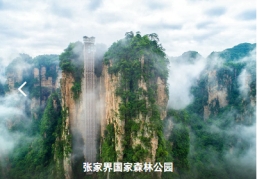
After breakfast, you will visit China's first national forest park – Zhangjiajie National Forest Park. First, you will take a scenic area sightseeing vehicle to the Bailong Sky Elevator, renowned as the "World's Highest Elevator." This elevator has broken the Guinness World Record for the tallest outdoor elevator and is also the fastest and heaviest outdoor sightseeing elevator, capable of transporting you smoothly from the mountain base to the summit in just 66 seconds, allowing you to experience the thrill of ascending directly from a secluded valley to the clouds in an instant.
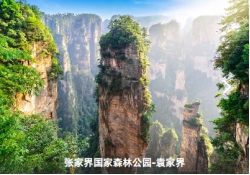
Upon reaching the summit platform, you can take in the breathtaking mountain scenery around you before hiking into a living version of Pandora – Yuanjiajie. This site served as the filming location for the movie Avatar and is home to the real-life Harriet Hill (originally known as South Pillar). Here, you can explore along designated trails, visiting major attractions such as the Back Garden, Enchanting Platform, and the World's First Bridge (a natural stone bridge and a landmark of Yuanjiajie). Along the way, you'll be immersed in the stunning landscapes of Zhangjiajie's mountains while gaining deeper insights into its unique geological features.
Next, take the sightseeing bus to the Tianzishan Nature Reserve, renowned as the "King of Peak Forests." Here, you will first visit the Command Platform to enjoy a panoramic view of the spectacular Xihai Peak Forest, then proceed to Yubi Peak—the representative feature of this forest system—to admire rows of straight peaks resembling brush strokes. Finally, hike to Helong Park to visit the bronze statues of Marshal He Long and his warhorse, and stop at the nearby Tianzi Pavilion for a comprehensive overview of the entire National Forest Park. After completing the tour, return to the hotel for rest.
Day3 Tianmen Mountain Half-Day Tour: Cable car ride + visit to Tianmen Cave + glass walkway experience + airport/station pickup service
Dining: Includes breakfast and lunch
Accommodation: arranged by oneself
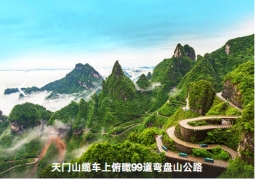
This morning, you will visit Tianmenshan National Forest Park, located approximately 8 kilometers from downtown Zhangjiajie. Recognized as the premier sacred mountain in western Hunan, it is suitable for visitors of all ages. You'll take a cable car to the summit—a journey lasting about 30 minutes—where you'll enjoy panoramic views of the 99 winding mountain roads along the way and the surrounding breathtaking landscapes.
Upon reaching the mountaintop, you will embark on two thrilling hiking adventures along the boardwalks. First, you'll walk the fully transparent glass boardwalk measuring 1.6 meters wide and 60 meters long; walking on it feels like strolling above the clouds, with majestic mountain scenery surrounding you and a bottomless valley below – an truly exhilarating experience. Next, you'll traverse the 1,600-meter-long Guigu Boardwalk, which winds like a giant dragon along the cliff face, offering panoramic views of the surrounding mountains throughout your journey – both thrilling and spectacular.
Next, visit Tianmen Temple—one of only five Buddhist temples worldwide that preserve Buddha's relics. You can also head to Yunmeng Xianting, the highest point in the Tianmen Mountain scenic area, offering a panoramic view of the surrounding landscape.
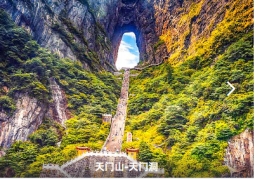
Next, take the escalator to Tianmen Cave—the must-see attraction in the Tianmen Mountain scenic area and the world's highest natural karst cave. After visiting, you can choose to hike up the steep 999 steps or take the elevator directly to the cable car station for a descent.
Day4 arrives in Guiyang: Transportation service + Hotel check-in
Dining: Meals are self-provided
Accommodation: Guiyang City
Welcome to Guiyang, the refreshing and pleasant capital city of Guizhou Province in China. Our driver will meet you at the exit of the airport or railway station and escort you to your hotel in Guiyang for check-in and rest. You are free to arrange your remaining time as desired.
Free Activity Suggestions:
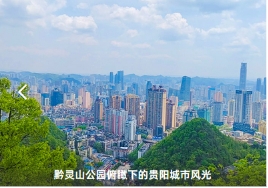
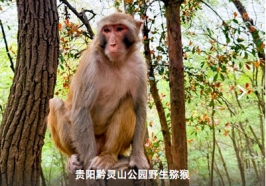
Qianling Mountain Park: Known as the "green lung of the city," it is a beloved leisure destination for Guiyang residents. Visitors can hike through Qianling Mountain to admire its stunning natural and cultural landscapes, with opportunities to encounter lively wild macaques along the way. For those wishing to offer incense and pray for blessings, Hongfu Temple is a must-visit site.
Jiaxiu Tower: One of the renowned historical and cultural landmarks in Guiyang, it ranks alongside the Yellow Crane Tower and Yueyang Tower as one of the "Nine Famous Towers of China." Visitors can stroll to admire its architectural marvels and cultural charm, especially the breathtaking sight at night when the lights reflect on the Nanming River, creating a unique scene described as "a tower reflected in a mirror amidst flowing water."
Qingyun Market: Located just 1 kilometer from Jiaxiu Building, it's an ideal spot to savor authentic Guizhou cuisine and enjoy vibrant nightlife, earning the reputation as "Guiyang's late-night dining hub."
Recommended arrival method:
Air Transport: Guiyang Longdongbao International Airport (KWE) is the city's sole airport, offering numerous direct domestic flights to cities such as Beijing, Xi' an, Shanghai, Guangzhou, Chengdu, Shenzhen, Wuhan, and Xiamen, as well as international routes to Bangkok, Kuala Lumpur, and Singapore, ensuring exceptional accessibility.
High-speed Rail: Guiyang is an important railway hub in southwestern China, with direct high-speed rail connections to major cities such as Guangzhou, Kunming, Chengdu, Chongqing, and Guilin, as well as other cities in Guizhou Province.
Day5 Journey from Guiyang to Kaili: Shiqiao Village (traditional papermaking) + Matang Giejiazhai (batik printing).
Dining: Includes breakfast and lunch
Accommodation: Kaili City
After breakfast, you will travel approximately 160 kilometers (about 2–2.5 hours by car) to Kaili, renowned as the "Pearl of Miao and Dong Cultures."
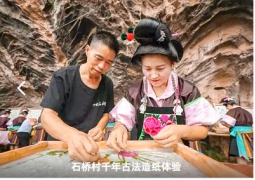
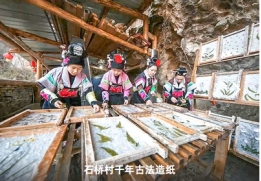
The first stop is Shiqiao Village, renowned as the "Hometown of Traditional Chinese Papermaking in China." It derives its name from a natural stone arch bridge spanning the Nangao River. The village is surrounded by mountains on all sides, with the Nangao River winding around it in an S-shape, creating a breathtakingly beautiful landscape. Moreover, Shiqiao Village has preserved intact the papermaking techniques passed down since the Tang Dynasty, using tree bark as the raw material and employing purely manual methods, earning it the title of a "living fossil" of papermaking. You can stroll through the original village scenery, photograph the charming Miao ethnic architecture, and even witness the ancient papermaking process that has endured for millennia. Cultural Experience: You will personally experience the production of floral paper by incorporating natural elements such as dried flowers and leaves into the pulp. Once it dries and sets, you will receive a special souvenir.
In the afternoon, you will visit Matang Gejiazhai, a traditional village predominantly inhabited by members of the Ge family, with a current population of over 400. These residents identify themselves as descendants of Hou Yi, the legendary hero who shot down the suns in ancient mythology; their clothing and silver ornaments often feature sun-shooting totems, and they maintain a unique language and customs. The village boasts a serene and picturesque environment, earning it the reputation as "a paradise for Hou Yi's descendants."
Moreover, every element in Matang Gejia Village—from clothing to tablecloths—is adorned with batik patterns, creating an immersive experience of this vibrant art form. Local women learn batik techniques from childhood, mastering geometric motifs (such as spiral and sun patterns) alongside natural designs featuring tigers, birds, fish, and flowers. The compositions are richly detailed and layered, making the area renowned as the "Hometown of Batik Art." For a cultural immersion, visitors can observe villagers performing traditional batik using beeswax (yellow wax), or participate firsthand in steps like painting, dyeing, and defrosting to create their own unique batik pieces as souvenirs.
After the tour, please proceed to our carefully selected hotel in Kaili City for accommodation and rest.
Note: If you plan to stay overnight in Xijiang Qianhu Miao Village and enjoy the stunning night views, please consult your travel advisor in advance.
Day6 Rongjiang–Congjiang–Zhaoxing Tour: Basha Miao Village + Zhanli Dong Village
Dining: Includes breakfast and lunch
Accommodation: Zhaoxing
住宿:肇兴
After breakfast in Rongjiang, we took a bus for approximately 90 kilometers (about two hours) to Congjiang, renowned as the "Holy Land for Mental Well-being," to begin today's exploration.
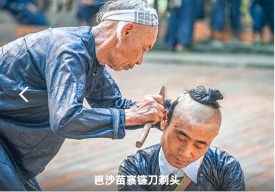
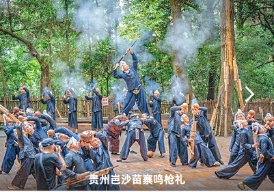
Upon arrival, visitors should first visit the mysterious [Basha Miao Village], known as China's "last gun tribe," which preserves customs such as scythe hair shaving and tree worship, and is hailed as one of the "21 most mysterious pristine tribes on Earth." Men in Basha are legally permitted to carry firearms for life; the musket serves as a symbol of tribal identity and courage. Their distinctive "guardian staff" hairstyle features shaving all surrounding hair except for a single bun on the top of the head. At the age of 15, Basha men complete this solemn coming-of-age ceremony by worshipping the Tree of Life, undergoing scythe hair shaving, and receiving a musket as a gift.
Furthermore, the Basha people revere trees as deities; each individual plants a "Life Tree" at birth, uses trees as burial coffins after death, and plants evergreen trees in graves to symbolize longevity. Their attire is highly distinctive, predominantly black: men wear traditional black garments representing tree bark, while women complement their black outfits with vibrant accessories. Notably, white skirt edges indicate marriage status, whereas black signifies single status. Visitors can stroll through the Basha Miao village to immerse themselves in this unique and mysterious Miao culture and pristine ecosystem, and have the opportunity to witness the spectacular gun salute ceremony, the sickle hair-cutting ritual, and captivating Lusheng music performances.
Next, you will proceed to visit [Zhanli Dong Village], renowned as the "First Village of Population and Culture in China." This Dong ethnic village is celebrated for its mysterious fertility custom of "flower exchange" and its isolated, pristine ecosystem. For centuries, almost every household has maintained a tradition of one male and one female child, with no cases of exceeding the birth limit. You can explore the village's "Male Well" and "Female Well," which are said to influence fetal gender upon consumption, adding an element of mystery; stroll through the village and terraced fields to capture the picturesque blend of the Dong village and its farmland landscapes; and experience traditional crafts such as Dong cloth weaving and bamboo weaving, immersing yourself in the authentic lifestyle of the Dong people.
After visiting the village, take a bus for approximately 1.5 hours to Zhaoxing and check into a hotel to rest.
Free Activity Recommendations:
Night View of Zhaoxing Dong Village: As night falls, the drum tower in Zhaoxing Dong Village shines like stars, evoking a fantastical scene from A Thousand Miles. Visitors can admire the spectacular "Water Drum Tower" from the viewing platform or stroll through ancient alleys to enjoy the gleaming charm of the weathered bridge and stilted houses.
Dong Ethnic Grand Song Performance: The unique polyphonic a cappella chorus of the China Dong ethnic group was inscribed on the Representative List of the Intangible Cultural Heritage of Humanity by UNESCO in 2009. You can listen to this exquisite "world-class intangible cultural heritage sound" at the Drum Tower or the traditional music training center.
Day7 route starts from Jiang: Zhaoxing Dong Village + Tang'an Dong Village.
Meal: includes breakfast
Accommodation: self-arranged
After breakfast, you will explore Zhaoxing Dong Village, hailed as the "First Dong Village," one of China's largest and best-preserved Dong ethnic settlements. It preserves intact traditional Dong architecture (drum towers, wind-and-rain bridges, stilted houses), intangible cultural heritage techniques (Dong grand songs, indigo dyeing), and folk activities (Yueye Festival, Sama Festival), earning it the title of "Museum of Dong Culture." The five drum towers within the village are named after the five major clan settlements and embody the virtues of benevolence, righteousness, propriety, wisdom, and trustworthiness. Standing up to 28 meters tall, these fully wooden structures without nails or rivets feature exquisitely carved animal and plant motifs on their eaves. They were inscribed in the Guinness World Records in 2016, making them a unique architectural marvel among China's Dong villages. You may ascend the viewing platform at the village entrance to take in the magnificent panoramic view of the entire settlement or wander through its ancient alleys to experience authentic Dong culture.
Next, take a vehicle to visit Tang'an Dong Village. Surrounded by mountains on three sides and featuring tiered terraced fields on the fourth, the village presents distinct scenery throughout the four seasons: mirror-like beauty in spring, lush greenery in summer, golden hues in autumn, and understated elegance in winter. As the terraces are constructed from stone blocks, they are renowned as the "Great Wall of Terraced Fields." The village preserves intact relics such as drum towers, stilted houses, stone-paved roads, and ancient well pits, fully reflecting the authentic characteristics of the Dong ethnic culture. Visitors can stroll along the rustic stone paths to admire the harmonious blend of stunning terraced fields and the village landscape, while also engaging in casual conversations with local residents to experience unique local customs and traditions.
Hunan Province Menglv International Travel Agency Co., Ltd Zhangjiajie Grand Canyon Zhangjiajie Seventy Two Strange Buildings Tianmen Mountain Forest Park Zhangjiajie Forest Park


Copyright ©2026-2031 Hunan Province Menglv International Travel Agency Co., Ltd All rights reserved
Tel:+86 19974447756

li13761893555@gmail.com

Rooms 1701-1703, Jingyuan Building, Huilong Road, Yongding District, Zhangjiajie City, Hunan Provinc